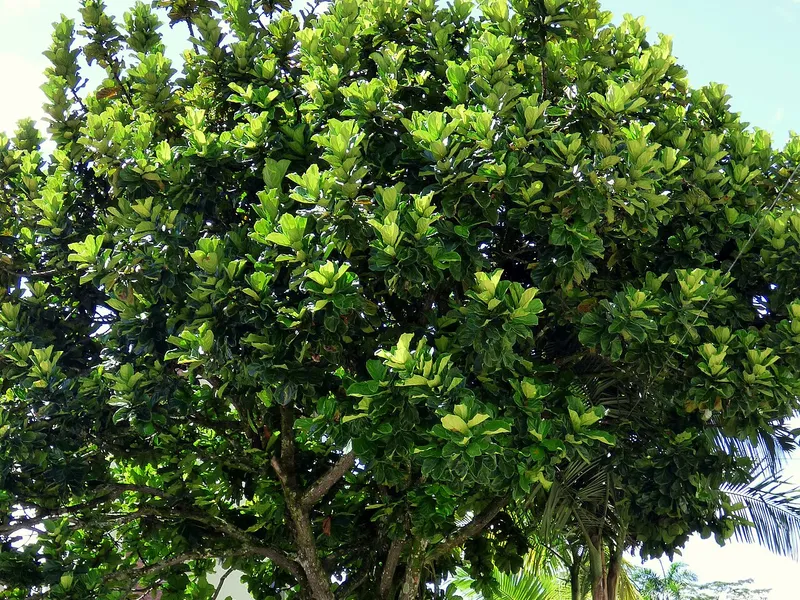
How to Propagate Fiddle Leaf Fig
Ficus lyrata
| Methods | Stem cutting, water, air layering |
| Difficulty | Advanced |
| Best season | Spring–summer |
| Time to root | 4–8 weeks |
| Group | Houseplant |
Fiddle leaf figs are the fussiest plant on this list to propagate, and the reason is simple: a cutting needs a node, and it needs consistent warmth and humidity for weeks, or the leaf drops before roots ever form. Success rates are genuinely mixed even for experienced growers. Take two or three cuttings rather than one.
A single leaf will not work. It can sit in water for months looking perfect and will never produce a plant — the node on the woody stem is what roots.
Which method should you use?
Air layering is the reliable method and the one to use on a tall or expensive plant. Roots form before you cut anything, so there’s almost no risk. Stem cuttings are worth trying when you’re already pruning and have material to spare.
Stem cutting (water or soil)
You need: clean sharp snips, a jar or pot of well-draining mix, and ideally a clear bag for humidity.
- Choose a stem section 6–10 inches long with 1–3 leaves and at least one node.
- Cut an inch below the lowest node.
- Milky white sap will bleed from the cut. Blot it with a damp cloth until it stops. It’s a skin irritant and toxic if eaten — wash your hands.
- Remove the lowest leaf. If the remaining leaves are very large, cut each in half crosswise to reduce water loss.
- Water: submerge the node, leaves above the surface, change weekly. Soil: bury the node 1–2 inches in moist well-draining mix.
- Tent a clear plastic bag loosely over the cutting to hold humidity. Bright indirect light, warm room, no direct sun.
Roots take 4–8 weeks. Pot when they reach 2–3 inches.
Air layering
- Pick a healthy spot on the main stem below the leafy top.
- With a clean blade, cut a shallow ring through the bark about an inch wide, all the way around — remove that strip of bark.
- Blot the sap. Optionally dust the wound with rooting hormone.
- Pack damp sphagnum moss around the wound, wrap in plastic, and tie both ends.
- Keep the moss damp. Roots fill it in 4–8 weeks.
- Cut below the root mass and pot the new plant.
When to propagate
Late spring through summer only. This plant needs warmth to root, and cuttings taken in autumn or winter usually drop their leaves and fail. If your home is cool, a heat mat makes a real difference.
Common problems
The leaf dropped and the stem shriveled. The most common failure — the cutting lost more water than it could take up. Use the humidity bag, cut large leaves in half, and keep it out of direct sun.
The cut end turned black. Rot. Change water weekly, or use a chunkier, faster-draining mix.
Sap everywhere, and it irritated my skin. Normal for Ficus. Blot the cut, work on a surface you can wipe, wash your hands after.
Two months, no roots, but the cutting looks fine. It may still be working — this plant is slow. Only give up when the stem softens or blackens.
Questions people ask
Can I propagate from a single leaf? No. It will root a little and stay a leaf forever. You need a node.
Will the cutting branch like the parent? A rooted cutting grows as a single stem at first. Pinching the top later encourages branching.
Is rooting hormone worth it here? Yes — this is one of the few plants where it noticeably improves the odds.
Related
Soil & cutting methods hub · Troubleshooting & rot hub · Similar plants: Rubber Plant, Ficus Audrey, Weeping Fig