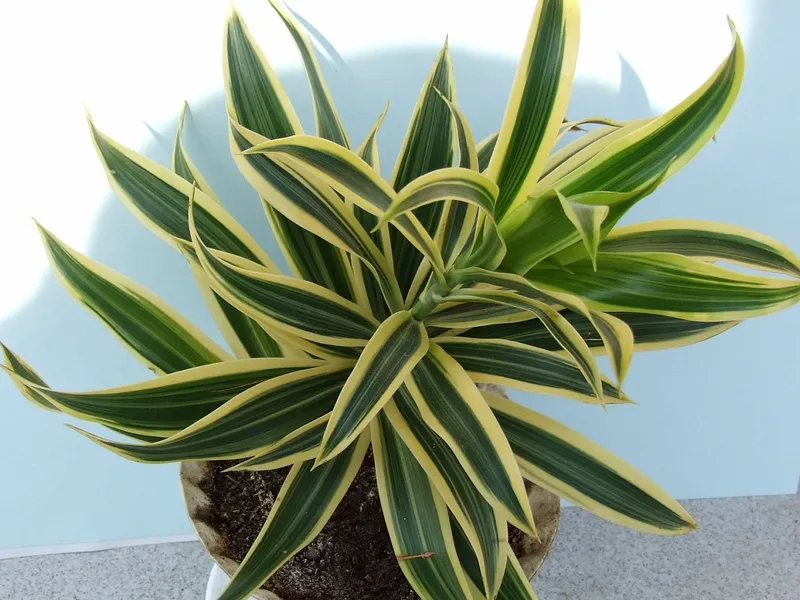
How to Propagate Corn Plant
Dracaena fragrans · Also called Mass Cane
| Methods | Stem cutting, cane cutting |
| Difficulty | Beginner |
| Best season | Spring–summer |
| Time to root | 4–8 weeks |
| Group | Houseplant |
Corn plant is usually sold as a bare woody cane with leaves at the top, and that cane itself can be propagated — a section of leafless woody stem, laid on its side, will sprout new roots and shoots from along its length. This surprises most people the first time they try it.
Which method should you use?
Cane cutting if you have a leafless section of the woody stem to work with — this is how corn plants are commercially propagated. Stem cutting with a leafy top section also works and gives you a finished-looking plant sooner.
Cane cutting
- Cut a section of bare woody cane, 4–6 inches long, from anywhere along the stem.
- Let the cut ends dry for a day.
- Lay the cane horizontally, half-buried, in moist potting mix — or stand it upright, either works.
- Keep the mix lightly moist. Bright indirect light.
New shoots emerge from dormant buds along the cane in 4–8 weeks, followed by roots at the base.
Stem cutting (leafy top)
- Cut the leafy top section, including some bare stem below it.
- Root in water or moist soil as with any leafy stem cutting, keeping the bare portion below the surface or waterline.
When to propagate
Spring and summer for fastest results, though this plant is fairly tolerant of timing.
Common problems
The cane cutting did nothing for months. This plant is genuinely slow. As long as the cane is firm, not soft or shriveled, it’s likely still viable.
The cutting rotted. Cane cuttings dislike sitting in constantly wet soil. Keep the mix lightly moist, not saturated.
New shoots are pale or thin. Move to brighter indirect light — low light produces weak, stretched growth.
Questions people ask
Can any section of the cane sprout, or only certain parts? Any section can work, since dormant buds are distributed along the whole stem, though thicker, healthier-looking sections tend to succeed more often.
Is the stump left behind still alive? Yes — the remaining base of the plant will usually resprout its own new growth from just below where you cut.
Is it toxic to pets? Mildly — it can cause drooling, vomiting, or diarrhea if chewed, especially in cats. Rarely serious, but keep trimmings away from pets.
Related
Soil & cutting methods hub · Similar plants: Dragon Tree, Song of India, Lucky Bamboo