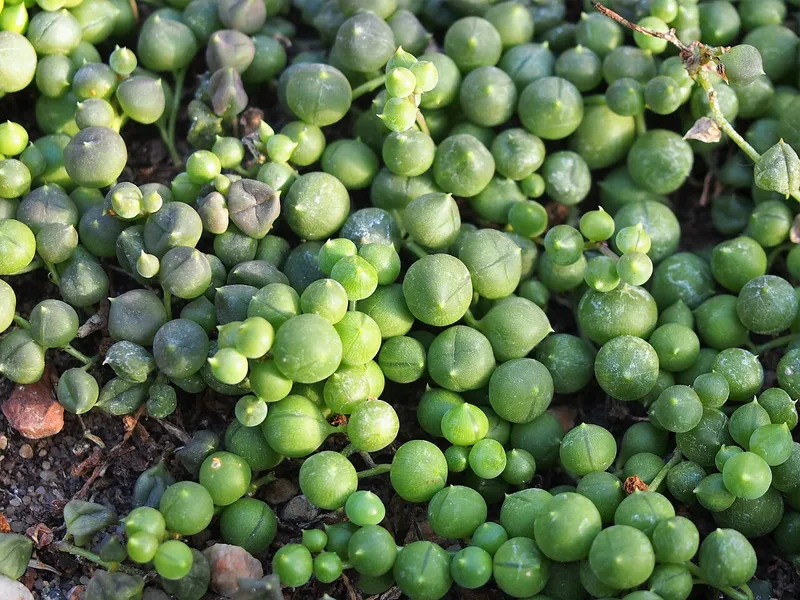
How to Propagate String of Pearls
Curio rowleyanus (formerly Senecio rowleyanus)
| Methods | Stem cutting, water |
| Difficulty | Intermediate |
| Best season | Spring–summer |
| Time to root | 2–4 weeks |
| Group | Succulent |
String of pearls roots from anywhere along its strands, which makes it easy — but it is also one of the most rot-prone plants people try to propagate. The reliable method is to lay a strand flat on dry soil rather than burying or submerging it. Roots emerge from the nodes where each pearl meets the stem, wherever they touch damp soil.
The plant fails far more often from too much water than too little. Treat every step as “less than you think.”
Which method should you use?
Laying strands on soil is the highest-success method and gives a full pot fast. Water rooting works but transitions poorly — these roots resent the change. Soil is the better default.
Laying strands on soil (best method)
- Cut healthy strands 4–6 inches long with a clean blade.
- Pinch off the pearls from the last inch or so, leaving bare stem and exposed nodes.
- Let the cuttings dry 1–2 days so the cut ends callus.
- Fill a shallow pot with dry cactus or succulent mix. Coil the strands on the surface so the bare nodes touch the soil.
- Press them down gently, or pin with hairpins. Don’t bury them.
- Mist lightly every few days. Once roots take hold (2–4 weeks), switch to watering only when the mix is bone dry.
Plant 5–10 strands per pot — one strand alone takes a very long time to look like anything.
Water propagation
- Cut a strand and strip the pearls from the last inch.
- Rest the bare end in a shallow glass so only the stem touches water — no pearls submerged.
- Change the water every few days.
- Pot into dry cactus mix when roots reach about an inch, and keep it barely moist for the first two weeks.
When to propagate
Spring and summer, when the plant is actively growing. In winter it slows almost to a stop and cuttings rot far more readily. This is also a good time to trim leggy strands and replant them into the same pot to fill gaps.
Common problems
Pearls turned mushy and translucent. Overwatering, the number one killer. Let the mix dry completely between waterings and never let the pot sit in standing water.
Pearls shriveled and wrinkled. Underwatering — genuinely possible too. Water thoroughly once, then let it dry out fully.
The strand rotted where it met the water. Submerged pearls. Only bare stem should touch water.
The strands are long and bare in the middle. Not enough light. This plant wants bright light including some gentle direct sun; cut the bare strands, root them, and replant them into the same pot.
Questions people ask
How many strands should I use? Five to ten per small pot. This plant looks sparse for a long time otherwise.
Do I need to callus the cuttings? Yes, 1–2 days. It meaningfully reduces rot.
Is it toxic? Yes, toxic to pets and people if eaten, and the sap can irritate skin.
Can I just tuck the strands into the parent pot? Yes — that’s the best way to thicken a thin plant.
Related
Succulents & cacti hub · Troubleshooting & rot hub · Similar plants: String of Hearts, String of Bananas, String of Dolphins