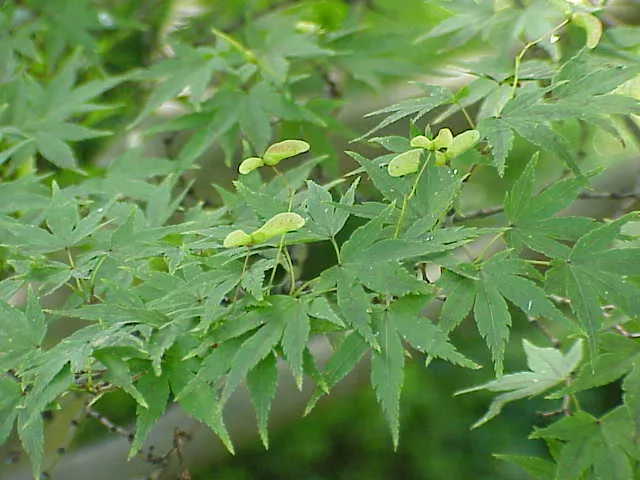
How to Propagate Japanese Maple
Acer palmatum
| Methods | Grafting, air layering, seed |
| Difficulty | Advanced |
| Best season | Summer (layering) / winter (grafting) |
| Time to root | Months |
| Group | Outdoor / garden |
Japanese maple is genuinely difficult from cuttings, which is why nurseries almost always graft named varieties onto seedling rootstock. For home growers without grafting experience, air layering is the realistic option for preserving a specific tree’s characteristics — seed-grown trees can vary significantly from the parent.
Air layering
- Choose a healthy branch in summer.
- Wound the bark in a ring.
- Wrap in damp sphagnum moss, cover with plastic, tie both ends.
- Check for roots after several months; cut free once well-rooted.
Growing from seed
Seeds need a cold stratification period (moist, refrigerated for 60–90 days) before sowing; resulting trees can look quite different from the parent, especially for named cultivars.
When to propagate
Summer for layering.
Common problems
Seed-grown tree doesn’t look like a named variety it came from. Expected — seed doesn’t reliably reproduce named cultivars; only grafting or layering preserves exact characteristics.
Questions people ask
Why do nurseries graft this tree instead of using cuttings? Straight cuttings have a very low success rate for this species, while grafting onto sturdy rootstock reliably preserves a specific variety’s leaf color and form.
Related
Soil & cutting methods hub · Similar plants: Magnolia, Camellia